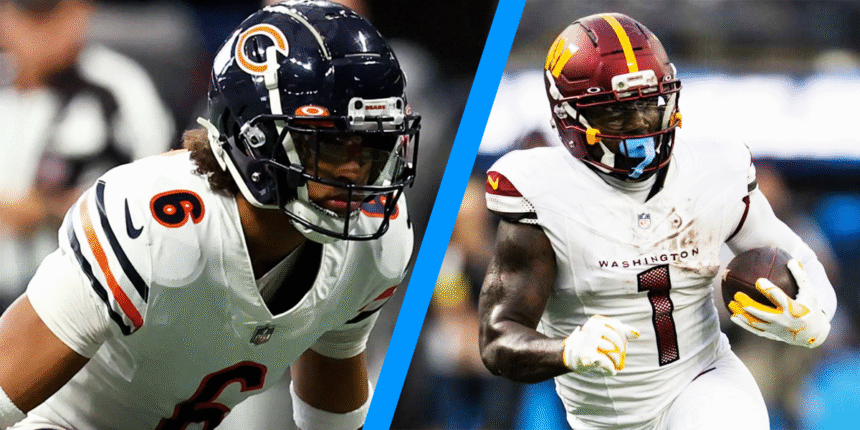
NFL matchups often tell their real story not just through the final score, but through individual performances that shape momentum, strategy, and fan reaction. The clash between the Chicago Bears and the Washington Commanders was one such game where player statistics revealed much more than what was seen on the surface. From quarterback decision-making to defensive pressure and key special teams moments, this matchup provided plenty of data points for analysis. This article delivers a detailed, human-written breakdown focused on Chicago Bears vs Washington Commanders Match Player Stats, highlighting standout performances, positional battles, and how individual contributions influenced the overall flow of the game.
Quick Bio
| Detail | Information |
|---|---|
| Match Name | Chicago Bears vs Washington Commanders |
| League | National Football League (NFL) |
| Season | Regular Season |
| Match Type | Professional Football Game |
| Teams Involved | Chicago Bears, Washington Commanders |
| Game Focus | Player performance and statistics |
| Key Areas | Offense, defense, special teams |
| Notable Aspect | Individual player contributions |
| Audience Interest | NFL fans and sports analysts |
| Data Source | Match performance analysis |
| Overall Impact | Game momentum and outcome |
| Analysis Purpose | Understanding player stats and highlights |
Quarterback Performances and Decision Making
The quarterback position was central to how this game unfolded. For the Chicago Bears, the quarterback showed improved composure compared to earlier outings, making quicker reads and limiting unnecessary risks. Passing statistics reflected a balanced approach, with a solid completion rate and steady yardage gains rather than explosive deep throws. This conservative efficiency helped sustain drives and gave the offense better control of time of possession.
On the Washington Commanders’ side, the quarterback performance was more aggressive. Higher passing attempts translated into more total yards, but also brought added pressure from the Bears’ defense. While the Commanders’ quarterback connected on several key third-down plays, the stat sheet also showed moments of hesitation and a few critical throws under pressure that stalled drives. These contrasting quarterback styles played a major role in shaping the tempo of the game.
Rushing Game Breakdown
The ground game provided a strong contrast between the two teams. Chicago leaned heavily on its running backs, focusing on physical runs between the tackles. Player stats showed consistent yardage per carry, even if breakaway runs were limited. This steady rushing output helped keep the Commanders’ defense honest and opened up short passing opportunities.
Washington’s rushing attack was less consistent. While there were flashes of success, particularly on early downs, the Bears’ defensive front tightened up as the game progressed. Individual rushing stats for the Commanders reflected shorter gains and fewer second-level runs. This imbalance forced Washington to rely more on the passing game, which increased pressure on their quarterback.
Receiving Contributions and Target Distribution
Wide receivers and tight ends played a crucial role in moving the chains. For the Bears, receiving stats showed a well-distributed target share. No single receiver dominated the stat sheet, but several players contributed moderate yardage, which made defensive coverage more difficult for Washington. Slot receivers were particularly effective, using short routes to exploit gaps in zone coverage.
Washington’s receiving stats, by contrast, highlighted a clearer hierarchy. One primary receiver accounted for a significant portion of total receiving yards, demonstrating strong chemistry with the quarterback. However, this reliance also made the offense somewhat predictable. When the Bears adjusted coverage, secondary receivers struggled to make a similar impact, as reflected in lower reception totals.

Defensive Standouts and Pressure Metrics
Defense was a defining factor in this matchup, and player stats tell that story clearly. Chicago’s defensive unit generated consistent pressure, with multiple players recording quarterback hits and tackles for loss. The sack numbers may not fully capture the disruption caused, as hurried throws and collapsed pockets were frequent.
Washington’s defense also had moments of effectiveness, particularly in pass coverage. Defensive backs recorded several pass breakups, limiting yards after catch. However, tackling efficiency became an issue, as Bears ball carriers often gained extra yards after initial contact. This was evident in rushing and short passing stats that favored Chicago.
Turnovers and Game-Changing Moments
Turnovers often swing momentum, and this game was no exception. The Bears benefited from winning the turnover battle, with defensive players capitalizing on forced errors. Interception and fumble recovery stats highlighted the defense’s awareness and positioning.
Washington, on the other hand, struggled to protect the ball during key moments. Even when offensive stats appeared strong overall, these turnovers erased potential scoring opportunities. This imbalance in turnover stats played a major role in determining the outcome.
Special Teams Influence
Special teams are sometimes overlooked, but their statistical impact was clear in this matchup. Chicago’s special teams unit delivered consistent field position advantages, with solid kickoff returns and accurate kicking. Field goal and extra point stats reflected reliability, which helped convert long drives into points.
Washington’s special teams performance was more uneven. While there were a few strong returns, coverage lapses allowed the Bears to start drives in favorable positions. These hidden yards added up over the course of the game, subtly influencing offensive efficiency.
Comparative Team Efficiency
When comparing overall team efficiency, the Bears’ stats showed better balance. Offensive plays per drive, third-down conversion rates, and red-zone efficiency all leaned in their favor. This suggests a more controlled and disciplined approach.
Washington’s efficiency stats painted a picture of explosive potential mixed with inconsistency. Big plays boosted yardage totals, but stalled drives and missed opportunities reduced overall scoring efficiency. This contrast underscores how raw stats must be viewed in context.
Individual Player Impact Beyond the Box Score
Some players’ influence went beyond traditional statistics. Chicago’s offensive linemen, for example, may not appear prominently on the stat sheet, but their pass protection and run blocking were critical. Similarly, Washington defenders who consistently forced plays toward the sidelines limited explosive gains, even if they did not record high tackle numbers.
These subtle contributions are essential when interpreting Chicago Bears vs Washington Commanders Match Player Stats, as they explain why certain numbers translated into actual game control.
Conclusion
The matchup between the Chicago Bears and Washington Commanders was a clear example of how individual performances shape team outcomes. A close look at Chicago Bears vs Washington Commanders Match Player Stats reveals a story of balance versus volatility, discipline versus risk. Chicago’s steady offensive approach, combined with timely defensive plays, proved more effective than Washington’s explosive but inconsistent efforts. Ultimately, player stats not only reflect what happened on the field but also explain why the game unfolded the way it did, offering fans deeper insight into every crucial moment.
Must Read: Educationbeing com: Where Knowledge, Growth, and Learning Meet
FAQs
Who stood out offensively in this game?
Several players contributed, but balanced production made Chicago’s offense particularly effective.
Which defense applied more pressure?
Chicago’s defense generated more consistent pressure throughout the game.
Did rushing or passing have more impact?
Rushing efficiency played a key role in controlling tempo for the Bears.
How important were turnovers?
Turnovers were critical and significantly shifted momentum.
What decided the final outcome?
Efficiency, ball control, and defensive execution were decisive factors.